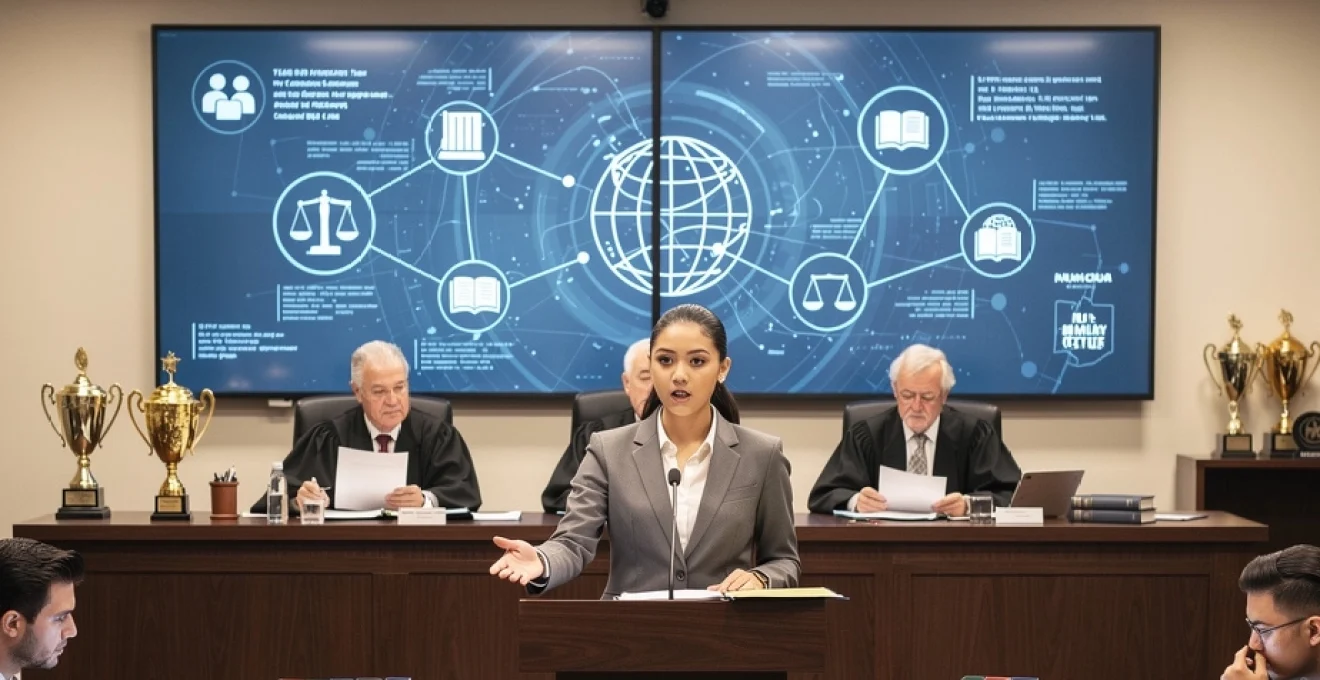
Moot court competitions represent one of the most transformative experiences available to law students, offering an unparalleled opportunity to develop essential legal skills whilst simulating real-world courtroom practice. These academic competitions bridge the gap between theoretical legal education and practical application, providing participants with hands-on experience in advocacy, research, and strategic legal thinking. From the prestigious Philip C. Jessup International Law Moot Court Competition to national constitutional law tournaments, these events have shaped countless legal careers over decades.
The intensive nature of moot court preparation demands participants to master complex legal concepts, construct persuasive arguments, and present their case before experienced judges and practitioners. This immersive experience develops competencies that prove invaluable throughout one’s legal career, whether in litigation, corporate practice, or judicial service. The skills acquired through moot court participation extend far beyond the competition itself, creating a foundation for professional excellence that distinguishes participants in their future endeavours.
Oral advocacy development through structured moot court practice
Moot court competitions fundamentally transform students into confident advocates through systematic oral presentation training. The structured environment of these competitions provides a safe space for developing public speaking abilities whilst maintaining the rigour and formality of actual courtroom proceedings. Participants learn to present complex legal arguments coherently, respond to challenging questions from the bench, and maintain composure under pressure—skills that prove essential in professional legal practice.
The advocacy skills developed through moot court participation extend beyond mere public speaking to encompass sophisticated legal reasoning and persuasive communication techniques. Students learn to distill complex legal principles into accessible arguments, adapting their presentation style to different audiences and judicial temperaments. This adaptability becomes particularly valuable when practitioners later appear before various courts and tribunals with distinct procedural requirements and judicial preferences.
Courtroom presentation techniques in philip C. jessup international law competition
The Jessup International Law Moot Court Competition, recognised globally as the world’s largest moot court competition, provides participants with exposure to international legal advocacy at its finest. Students representing over 700 law schools worldwide develop sophisticated presentation techniques through preparation for this prestigious event. The competition’s focus on public international law requires advocates to master complex treaties, customary international law, and jurisdictional principles whilst presenting arguments before panels of distinguished international law practitioners.
Participants in the Jessup competition learn to navigate the intricacies of international legal argumentation, including the proper citation of International Court of Justice decisions, treaty interpretation principles, and state responsibility doctrines. The competition format encourages advocates to develop persuasive storytelling techniques that contextualise legal arguments within broader international relations frameworks. These presentation skills prove invaluable for practitioners who later work in international law firms, diplomatic service, or international organisations.
Persuasive argument construction using IRAC methodology
The IRAC methodology—Issue, Rule, Application, Conclusion—forms the backbone of effective legal argumentation in moot court competitions. Students learn to identify legal issues precisely, articulate governing legal principles clearly, apply those rules to specific factual scenarios methodically, and draw logical conclusions convincingly. This structured approach to legal reasoning becomes second nature through repeated moot court practice, creating advocates who can construct compelling arguments under time constraints and pressure.
Advanced moot court participants develop sophisticated variations of the IRAC framework, incorporating policy considerations, comparative law analysis, and strategic counter-arguments. The systematic approach to argument construction learned through moot court practice translates directly to brief writing, client counselling, and judicial advocacy in professional practice. Students discover how to layer multiple legal theories, anticipate opposing arguments, and construct fallback positions that strengthen their overall case presentation.
Cross-examination skills refinement in national trial competitions
Whilst traditional moot courts focus on appellate advocacy, trial competitions provide invaluable experience in witness examination and evidence presentation. These competitions teach students to formulate strategic questions that advance their case theory whilst undermining opposing arguments. Participants learn to control the pace and direction of witness testimony, extract favourable admissions, and respond effectively to unexpected witness responses.
The skills developed through trial competition participation extend to depositions, client interviews, and witness preparation in professional practice. Students learn to read non-verbal communication, adapt their questioning strategy in real-time, and maintain credibility with fact-finders even when facing adverse testimony. These
The skills developed through trial competition participation extend to depositions, client interviews, and witness preparation in professional practice. Students learn to read non-verbal communication, adapt their questioning strategy in real time, and maintain credibility with fact-finders even when facing adverse testimony. Over time, this structured practice refines a student’s ability to control the narrative without appearing aggressive or unfair—an essential balance for any effective trial advocate. By the time students transition into practice, they are far more comfortable managing live evidence and thinking strategically on their feet.
Judicial interaction protocols and questioning response strategies
An often underestimated aspect of moot court advocacy is learning how to interact appropriately with the bench. Competitors must quickly become familiar with judicial forms of address, the etiquette of rising when spoken to, and the professional courtesies expected in appellate and trial courts. This immersion in courtroom protocol ensures that, from early in their training, students behave with the decorum and respect expected of practising advocates. Mastering these protocols also prevents avoidable mistakes that can distract from the substance of a legal argument.
Beyond etiquette, moot court competitions train students to respond to judicial questioning with precision and composure. Judges in leading competitions frequently intervene with probing questions, hypotheticals, and challenges to assumptions. Through repeated exposure, advocates learn to pause, clarify the question, and then answer directly before returning to their planned submissions. They discover how to concede minor points without undermining their core argument, how to distinguish unfavourable precedents on the spot, and how to reframe a difficult question as an opportunity to reinforce their case theory.
These judicial interaction skills are invaluable in real-world advocacy. In appellate courts in particular, the ability to have a genuine conversation with the bench—rather than rigidly reciting a script—often distinguishes the most persuasive advocates. Moot court participants also learn to manage time whilst fielding questions, ensuring that key submissions are still addressed despite frequent interruptions. In practice, this translates into advocates who can remain calm in high-stakes hearings, adapt to unexpected lines of inquiry, and maintain the confidence of the court.
Legal research proficiency enhancement via case preparation
Every moot court case problem is, at its core, a research exercise. To prepare effectively, students must locate, interpret, and synthesise a wide range of primary and secondary authorities. This goes far beyond reading a textbook summary; it requires the disciplined use of professional legal databases, careful note-taking, and methodical organisation of authorities. By working under competition deadlines, students also learn to conduct efficient, targeted research rather than aimless reading.
The research skills developed through moot court preparation underpin almost every aspect of a legal career. Whether drafting an opinion, preparing for trial, or advising a corporate client, the ability to find the most relevant authorities quickly and assess their weight is central to competent practice. Moot court competitors gain early exposure to this professional standard, which gives them a significant advantage in internships, clerkships, and junior associate roles. Over time, repeated competition cycles transform research from a daunting task into a familiar and manageable process.
Westlaw and LexisNexis database navigation for competition research
One of the most tangible benefits of moot court participation is early mastery of professional research platforms such as Westlaw and LexisNexis. Rather than relying solely on casebooks or open web searches, competitors learn to use advanced search filters, headnotes, citators, and topic digests to pinpoint relevant authority. Many law schools now include research training as part of moot preparation, ensuring that students understand both the technical and strategic use of these databases.
For example, when preparing for a constitutional moot court problem, students quickly learn that broad keyword searches generate unmanageable results. Instead, they refine searches by jurisdiction, court level, and date range, and use tools like KeyCite or Shepard’s to verify whether cases are still good law. They learn to trace how a particular principle has evolved across decades of jurisprudence, and to identify leading cases that carry more persuasive weight than marginal authorities. This targeted, database-driven approach to legal research is directly transferable to real practice.
Over successive competitions, students often develop personal research workflows—combinations of search terms, filters, and note-taking systems—that dramatically increase their efficiency. This is particularly valuable in time-pressured environments, such as urgent applications or tight client deadlines. By the time moot court participants graduate, they are typically far more comfortable with Westlaw and LexisNexis than peers who have not had similar exposure, making them immediately more productive in professional settings.
Primary source analysis in constitutional law moot court scenarios
Constitutional law moot courts provide a particularly rich environment for developing skills in primary source analysis. Rather than relying on secondary commentary, competitors must grapple directly with constitutional texts, framers’ debates, legislative histories, and leading court decisions. This requires close reading, attention to textual nuance, and a willingness to engage with competing interpretive methodologies such as originalism, textualism, and purposivism.
Students learn to dissect constitutional provisions word by word, asking what each term contributes to the provision’s legal effect. They become familiar with the structure of constitutional documents, the relationship between rights and limitations, and the hierarchy between constitutional text and ordinary legislation. In advanced competitions, they may also be required to consider comparative constitutional materials, analysing how similar provisions have been interpreted in other jurisdictions and assessing whether those interpretations are persuasive in their own.
This rigorous focus on primary sources builds a deeper and more durable understanding of constitutional law than surface-level summaries ever could. It trains students to question assumptions, to look for internal coherence within a legal system, and to identify gaps or ambiguities that can be leveraged in argument. In practice, these analytical habits enable future lawyers to handle complex constitutional litigation, public law challenges, and judicial review proceedings with greater confidence and sophistication.
International treaty interpretation for human rights competition cases
Human rights moot court competitions, many of which are modelled on regional or international human rights courts, require students to become adept at treaty interpretation. Competitors must not only read the text of instruments such as the International Covenant on Civil and Political Rights or regional human rights conventions but also apply interpretive principles derived from the Vienna Convention on the Law of Treaties. This involves considering the ordinary meaning of terms, their context, and the treaty’s object and purpose.
Participants quickly learn that treaty interpretation is rarely mechanical. They must engage with travaux préparatoires, general comments of treaty bodies, and jurisprudence from international and regional courts to understand how particular rights have been developed in practice. They also need to reconcile potentially conflicting obligations under different instruments and assess the relevance of soft-law materials such as declarations or guidelines. This combination of textual analysis and contextual reasoning mirrors the work of practitioners in international and human rights law.
Through repeated exposure to these interpretive challenges, moot court competitors develop a nuanced appreciation of how international law operates in practice. They learn to craft arguments that are sensitive to state sovereignty concerns, systemic consistency, and evolving understandings of human rights. Even for those who ultimately practise in domestic courts, this experience with international treaty interpretation enhances their ability to argue cases involving cross-border issues, constitutional rights, or the reception of international law into domestic legal systems.
Precedent synthesis techniques in supreme court simulation exercises
Supreme Court simulation moots demand a high level of sophistication in dealing with precedent. Rather than relying on a single case, students must synthesise lines of authority, reconcile apparent inconsistencies, and predict how a supreme court might refine or depart from earlier decisions. This requires an analytical approach similar to assembling a complex puzzle: each case provides a piece of the doctrinal picture, but only when viewed together does a coherent pattern emerge.
Competitors learn to identify ratios decidendi, distinguish obiter dicta, and assess the relative weight of majority, concurring, and dissenting opinions. They often map the evolution of a doctrine over time, noting where the court has narrowed or expanded a principle and how lower courts have interpreted those signals. This process teaches students to think like appellate judges rather than mere case summarizers, evaluating not just what the law is but where it might reasonably be headed.
These precedent synthesis techniques are central to high-level appellate advocacy and academic legal writing. In practice, lawyers who can weave together multiple authorities into a persuasive doctrinal narrative are better equipped to argue for incremental change in the law or to justify novel applications of established principles. Supreme Court simulation moots thus provide an invaluable training ground for anyone interested in appellate practice, law reform, or judicial clerkships.
Brief writing mastery through competitive legal drafting
Whilst oral advocacy tends to attract the most attention, moot court competitions are equally powerful tools for developing written advocacy skills. Many competitions require teams to submit detailed memorials or briefs—often scored independently of oral rounds—that set out the factual background, questions presented, legal arguments, and requested relief. Drafting these documents under strict formatting and word-limit requirements teaches students to be concise, precise, and persuasive on the page.
Effective competition briefs mirror professional appellate submissions in structure and tone. Students must craft a compelling introduction, articulate clear issues, present a logically ordered argument, and support every proposition with authoritative citations. They also learn to use headings, subheadings, and signposting to guide the reader through complex reasoning. Over time, competitors develop an instinct for what belongs in the main text and what can be moved to footnotes, as well as how to balance doctrinal analysis with policy considerations.
The discipline of competitive legal drafting pays dividends in every area of practice. Whether preparing motions, opinions, or client-facing documents, lawyers must convey complex information in a way that busy readers can digest quickly. Moot court participants, having already written multiple rounds of competition briefs, are often more adept at identifying and emphasising key points, cutting unnecessary material, and maintaining a consistent, professional tone. For many students, the transition from moot memorials to real-world pleadings is surprisingly smooth.
Strategic case analysis skills in willem C. vis international commercial arbitration moot
The Willem C. Vis International Commercial Arbitration Moot offers a unique environment for developing strategic case analysis skills in the context of international commercial disputes. Unlike many appellate-style competitions, the Vis moot requires students to engage with procedural and substantive issues under instruments such as the CISG and institutional arbitration rules. This dual focus forces competitors to think not only about who is legally right but also about how procedural strategy can influence outcomes.
In preparing for the Vis moot, students learn to analyse complex fact patterns that resemble real cross-border commercial disputes. They must identify key contractual provisions, allocate risk between parties, and assess the implications of choice-of-law and choice-of-forum clauses. They also consider tactical questions such as jurisdictional objections, document production requests, and the selection of arbitrators. This integrated approach trains students to view disputes through both a doctrinal and a commercial lens.
Moreover, the Vis moot places significant emphasis on written memoranda and oral hearings that simulate arbitral proceedings. Competitors must adapt their advocacy style to the less formal, more conversational nature of arbitration, whilst still maintaining analytical rigour. They also become familiar with concepts such as party autonomy, confidentiality, and enforcement of awards under the New York Convention. For students considering careers in international arbitration or commercial litigation, this combination of legal analysis and practical strategy is invaluable.
Professional networking and career development through competition participation
Beyond skills development, moot court competitions serve as powerful platforms for professional networking and career advancement. Regional, national, and international tournaments bring together students, academics, practitioners, and judges in a concentrated setting where shared interest in advocacy creates natural opportunities for conversation. Many competitions are sponsored by leading law firms or chambers, whose representatives attend as judges, coaches, or observers.
For students, these events offer a rare chance to demonstrate their abilities directly to potential employers. A strong oral performance, insightful answer to a judge’s question, or well-crafted memorial can leave a lasting impression. Informal conversations at receptions, workshops, or training sessions often lead to mentorship, internship offers, or invitations to apply for specific roles. In some jurisdictions, participation or success in prestigious moot competitions is explicitly valued by recruitment panels, particularly for litigation and public law positions.
Moot court also fosters peer-to-peer networking. Competitors build relationships with teammates, opponents, and students from other institutions who may later become colleagues or co-counsel. These networks can prove invaluable when navigating early career decisions, seeking recommendations, or exploring specialised practice areas. For many practitioners, the professional connections first formed through moot court participation continue to influence their careers decades later.
Critical thinking enhancement via mock trial adjudication processes
Finally, moot court competitions significantly enhance critical thinking by exposing students not only to advocacy but also to adjudication. Many programmes encourage experienced competitors to sit as judges in introductory moots or school-level competitions. In this role, students must evaluate arguments objectively, differentiate between strong and weak submissions, and articulate constructive feedback. This shift in perspective—moving from advocate to decision-maker—deepens their understanding of what makes legal reasoning truly persuasive.
The adjudication process requires careful attention to structure, coherence, and evidential support. Student-judges soon recognise that even a confident delivery cannot compensate for logical gaps or misapplied authority. They also become more aware of common pitfalls, such as over-reliance on a single case, failure to address the strongest arguments on the other side, or ignoring unfavourable facts. This insight feeds back into their own advocacy, making them more self-critical and more effective in refining their future submissions.
Mock trial adjudication also nurtures broader problem-solving abilities. Judges must weigh competing interpretations, manage time fairly between parties, and sometimes reconcile their initial impressions with arguments that emerge only late in the hearing. This mirrors the cognitive demands placed on real judges, who must remain open to persuasion whilst maintaining analytical discipline. For law students, developing this balanced, reflective mindset is one of the most valuable outcomes of sustained engagement with moot court and mock trial processes.