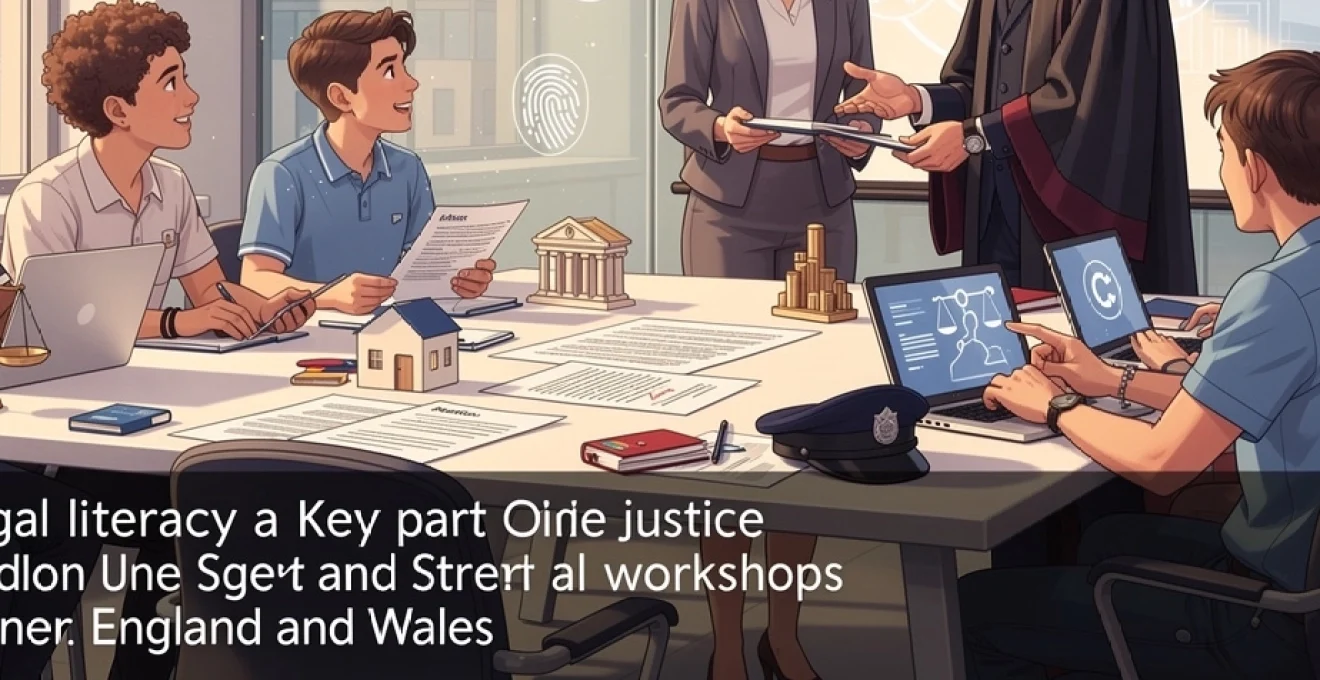
When a sixteen-year-old signs their first mobile phone contract, do they understand the implications of that 24-month commitment? When a university student receives a tenancy agreement for student accommodation, can they identify unfair terms that might leave them financially vulnerable? These aren’t hypothetical concerns—they represent daily realities for young people navigating an increasingly complex legal landscape with minimal preparation. Legal literacy, the ability to understand and engage with law in practical contexts, has become an essential life skill rather than a specialist concern. Yet education systems across England and Wales continue to graduate students with limited knowledge of their statutory rights, contractual obligations, or pathways to justice. This gap between educational provision and real-world requirements demands urgent attention, particularly as digital transformation introduces new layers of legal complexity that young people must navigate from their earliest online interactions.
The consequences of inadequate legal literacy extend far beyond individual inconvenience. Communities with low legal awareness experience higher rates of exploitation, reduced civic engagement, and diminished trust in legal institutions. As the LexisNexis Rule of Law Foundation emphasises, education represents one of the most practical and non-partisan methods for strengthening the rule of law itself. When citizens understand their rights and the mechanisms available to protect them, they’re more likely to engage with legal processes constructively and at earlier stages of disputes. This foundational understanding supports not only individual empowerment but also the broader functioning of democratic society.
Legal literacy deficits in contemporary education systems
Recent assessments reveal troubling gaps in young people’s understanding of fundamental legal principles that affect their daily lives. Research conducted across secondary schools in England and Wales demonstrates that students leaving formal education possess remarkably limited knowledge of consumer rights, employment law, housing regulations, and criminal justice procedures. These deficits aren’t merely academic concerns—they translate directly into vulnerable decision-making during critical life transitions. The Basic Education Rights Handbook project in South Africa, led by Section27 and partner organisations, exemplifies how legal literacy tools can empower communities to understand and apply law in ways that improve quality of life. Similar initiatives are desperately needed within UK education frameworks.
Gap analysis between GCSE citizenship curricula and Real-World legal competencies
Current GCSE Citizenship specifications include elements of legal education, covering the justice system, human rights, and the rule of law. However, these topics receive superficial treatment within a crowded curriculum competing for limited teaching time. A typical citizenship programme might dedicate two or three lessons to the entire justice system, leaving students with abstract knowledge about institutional structures but minimal understanding of how law operates in practical contexts. Students learn that courts exist and that rights are protected, but they don’t learn how to challenge an unfair dismissal, what constitutes a binding contract, or when police can lawfully search their possessions. This theoretical approach fails to build the practical competencies that young people require as they enter adult responsibilities.
Statutory rights awareness amongst secondary school leavers in england and wales
Survey data from the Law Society and various youth organisations reveals concerning statistics about rights awareness among school leavers. Approximately 62% of 16-18 year olds cannot correctly identify their basic employment rights, including minimum wage entitlements, working time regulations, or protections against discrimination. Similarly, around 71% demonstrate poor understanding of consumer rights under the Consumer Rights Act 2015, leaving them vulnerable to exploitative practices in an increasingly digital marketplace. These figures represent more than knowledge gaps—they indicate systemic failures in preparing young people for economic citizenship. When you don’t understand your statutory protections, you cannot effectively exercise them, creating conditions where violations become normalised rather than challenged.
Contractual comprehension levels in young adults aged 16-24
Perhaps most alarmingly, research indicates that substantial majorities of young adults cannot accurately identify basic contractual elements or understand the legal implications of agreements they routinely enter. A 2024 study by the Money and Pensions Service found that 68% of 16-24 year olds had signed contracts without reading them fully, and 73% couldn’t correctly define what makes a contract legally binding. This contractual illiteracy has tangible consequences: young people disproportionately fall victim to mis-sold financial products, exploitative employment terms, and unfair tenancy agreements. The problem intensifies in digital contexts, where “agreeing” to terms of service has become a
reflex action rather than an informed choice. Clicking “I agree” has become the legal equivalent of scrolling past the small print on a warning sign—young people assume it is standard and safe, without appreciating that they are often granting extensive rights over their data, content, or future payments. Building contractual comprehension is not about turning every teenager into a lawyer; it is about ensuring they can recognise red flags, ask informed questions, and seek help before committing to long-term obligations.
Digital rights and data protection knowledge under GDPR frameworks
Alongside traditional contract law, young people now need a working understanding of digital rights and data protection. Under the UK GDPR and Data Protection Act 2018, individuals enjoy extensive rights over how their personal data is collected, used, and shared. Yet surveys by the Information Commissioner’s Office (ICO) suggest that many 16-24 year olds cannot explain concepts like consent, legitimate interest, or the right to be forgotten. This disconnect is striking when we consider how much of their daily life—social media, gaming, education platforms, banking apps—relies on personal data being processed at scale.
In practice, this means that young people routinely hand over sensitive information without questioning why it is needed or how it will be used. Few know that they can ask organisations for a copy of their data through a subject access request, or challenge automated decisions that significantly affect them, such as credit scoring or exam grading algorithms. Effective legal literacy in this area should help students understand privacy notices, recognise excessive data collection, and identify when data breaches may give rise to legal remedies. As digital identities become as significant as physical ones, integrating GDPR awareness into modern education is no longer optional—it is a core component of safeguarding and autonomy.
Integrating consumer law and contractual obligations into secondary education
If legal literacy is to become a meaningful part of modern education, consumer law and contractual obligations must move from the margins of optional enrichment activities into the mainstream curriculum. These areas of law intersect directly with the lived experience of teenagers: they subscribe to streaming services, buy goods online, take out mobile contracts, and increasingly use “buy now, pay later” products. Rather than treating these interactions as mere financial education topics, we should explicitly frame them as legal relationships governed by rights and duties. Doing so helps demystify the law and shows students that legal concepts are not abstract—they are embedded in everyday transactions.
Embedding consumer law into secondary education does not require a complete overhaul of existing subjects. Instead, it calls for strategic integration into citizenship, PSHE, maths, and even English lessons, using real documents and scenarios that students recognise. By the time pupils leave school, they should be comfortable reading a basic contract, spotting unfair terms, and knowing where to seek advice when things go wrong. In other words, they should be equipped to function as informed consumers and workers in a complex marketplace.
Teaching the consumer rights act 2015 through practical case studies
The Consumer Rights Act 2015 provides a rich foundation for practical, scenario-based teaching. Rather than asking students to memorise sections, educators can use common situations—faulty electronics, delayed deliveries, misleading online adverts—to explore what the law actually provides. For example, a lesson might present a case where a student buys a second-hand laptop that stops working within a month. Working in groups, pupils could identify which rights apply (goods must be of satisfactory quality, fit for purpose, and as described) and what remedies are available (repair, replacement, or refund).
Case studies like this allow students to practise reading short extracts of legislation alongside retailer terms and conditions, building both legal literacy and critical reading skills. Teachers can draw on simplified judgments from ombudsman decisions or small claims cases to show how principles are applied in real disputes. Over time, students begin to see patterns: they learn that time limits matter, that keeping evidence such as receipts and screenshots is important, and that complaining effectively can lead to resolution without formal court action. This applied approach turns the Consumer Rights Act from a distant statute into a practical toolkit.
Employment contract fundamentals for pre-university students
Many young people start part-time work while still in full-time education, yet few receive structured guidance on employment contracts before signing them. Schools can address this by introducing core employment law concepts in the final years of secondary education, ideally linked to careers education. Topics might include the difference between an employee and a worker, the significance of written terms, notice periods, probation clauses, and basic protections such as the National Minimum Wage, rest breaks, and protection from unlawful deductions.
One effective method is to have students analyse anonymised sample employment contracts from typical roles—retail, hospitality, gig economy work. They can highlight key clauses, discuss which terms are negotiable, and spot problematic wording such as broad “zero-hours” availability requirements or unclear pay structures. Role-play exercises, where one student acts as an employer and another as a prospective employee, can help build confidence in asking clarifying questions before signing. By normalising the idea that it is reasonable to read and query an employment contract, schools can help prevent exploitation and encourage healthier workplace relationships from the outset.
Tenancy agreements and housing rights education for school leavers
Housing is another area where low legal literacy can have long-lasting consequences. Many school leavers and first-year university students sign tenancy agreements without understanding key terms on deposits, joint liability, repairs, or eviction procedures. Introducing basic housing law concepts in the final year of secondary school, particularly for those likely to move into rented accommodation, can significantly reduce vulnerability. Lessons could cover the difference between assured shorthold tenancies and licences, rights to safe and habitable accommodation, and the role of tenancy deposit protection schemes.
Practical exercises might involve comparing two sample tenancy agreements to identify which offers better security and fairness. Students can learn what to check before signing—such as inventory accuracy, notice periods, and clauses on subletting or guests—and how to respond lawfully if a landlord fails to carry out essential repairs. Partnering with local housing advice services or university accommodation offices to deliver guest workshops can reinforce these messages with real-world insight. When young renters understand their housing rights, they are far less likely to accept unlawful practices such as unprotected deposits, illegal fees, or informal threats of eviction.
Credit agreements and financial services regulation literacy
The boundary between consumer law and financial regulation is increasingly blurred for young people, who are targeted by credit products from an early age. Store cards, overdrafts, and “buy now, pay later” schemes are marketed as convenient lifestyle enhancers, yet each creates legally binding obligations with serious consequences if misunderstood. Integrating basic credit law and financial services literacy into secondary education helps students distinguish between different types of borrowing, understand interest and default charges, and recognise their rights under the Consumer Credit Act 1974 and Financial Conduct Authority (FCA) rules.
Teachers can use anonymised examples of credit agreements and marketing materials to explore common pitfalls: teaser rates that increase after a promotional period, automatic credit limit increases, or vague explanations of fees. Discussing real regulator enforcement actions, in simplified form, can show students that mis-selling is not rare and that complaining to the Financial Ombudsman Service is a viable route to redress. By treating credit agreements as contracts with both legal and financial dimensions, education can empower young people to borrow, if they choose to, on informed and sustainable terms rather than under pressure or confusion.
Criminal justice system awareness programmes in schools
Understanding the criminal justice system is often framed as a matter of civic knowledge, but for many young people it is a matter of personal safety and rights. Encounters with police, stop and search practices, or contact with the youth justice system are disproportionately common in certain communities, yet formal education rarely prepares pupils for these realities. Effective criminal justice education should therefore combine structural understanding—how courts, police, and prisons function—with practical guidance on individual rights and responsibilities.
Well-designed programmes can reduce mistrust between young people and justice institutions by replacing myths and misinformation with clear, evidence-based information. They can also help students recognise the consequences of criminal behaviour, not just in terms of punishment but also long-term impacts on employment, travel, and housing. When legal literacy includes a grounded understanding of criminal processes, students are better able to navigate difficult situations, support peers, and engage constructively with efforts to reform and improve the system.
Police and criminal evidence act 1984: know your rights workshops
The Police and Criminal Evidence Act 1984 (PACE) sets out critical safeguards for individuals during police encounters, yet few teenagers can explain what these rights entail. “Know your rights” workshops delivered in schools can bridge this gap, focusing on scenarios students might actually face: stop and search, being asked to attend a voluntary interview, or being taken to a police station. Through role-play and guided discussion, pupils can learn about the requirement for reasonable grounds, the right to legal advice, and the importance of not obstructing officers while still asserting their rights.
These workshops work best when delivered in partnership with legal professionals, youth workers, and, where appropriate, community policing representatives. This multi-perspective approach helps demystify police powers while acknowledging concerns about disproportionate use in some communities. Clear, non-sensational explanations of PACE Codes of Practice—translated into accessible language—can dispel myths (for example, that you must always provide your name and address) and encourage young people to seek legal support promptly when needed. In this way, PACE education strengthens both individual protection and the legitimacy of lawful policing.
Youth justice system navigation and legal representation access
For young people who do become involved in the youth justice system, early access to legal representation and support can make a profound difference to outcomes. Yet many adolescents and their families do not understand how to obtain a solicitor, what legal aid covers, or what to expect from youth court proceedings. Incorporating youth justice navigation into school curricula, particularly in areas with higher rates of youth offending or police contact, can equip students with realistic knowledge before a crisis arises.
Lessons might walk through the journey from arrest to charge to court, highlighting decision points where legal advice is crucial. Students can learn about the role of appropriate adults in police interviews, the differences between cautions and convictions, and the long-term implications of a criminal record. Signposting to local legal advice centres and youth advocacy services is essential, ensuring that theoretical learning is backed by practical routes to help. By normalising the idea that accessing a lawyer is a right, not an admission of guilt, schools can foster a healthier culture around legal representation.
Hate crime legislation and protected characteristics under the equality act 2010
In a diverse society, understanding hate crime law and equality protections is vital for both personal safety and social cohesion. The Equality Act 2010 sets out protected characteristics—such as race, religion, disability, sex, sexual orientation, and gender reassignment—and prohibits discrimination, harassment, and victimisation in key spheres of life. Criminal law frameworks also recognise hate-motivated offences as aggravating factors, leading to more severe sentences. Yet misconceptions about what constitutes a hate crime or unlawful discrimination remain widespread among young people.
Classroom discussions can explore everyday scenarios: bullying targeting a student’s religion, online abuse directed at someone’s sexual orientation, or exclusionary practices in part-time employment. Students can consider which behaviours are criminal, which are civil wrongs, and which might be both. By connecting legal definitions to lived experiences of prejudice, schools can help pupils understand not only their rights as potential victims but also their responsibilities as bystanders or perpetrators. Empowering students to report hate incidents—through school systems, the police, or third-party reporting centres—strengthens both individual protection and wider community resilience.
Family law foundations for adolescent learners
Family law may seem remote to teenagers, yet it shapes many aspects of their lives: parental responsibility, child arrangements, safeguarding, and the legal frameworks around marriage and cohabitation. As adolescents approach adulthood, questions about their own rights within their family, their ability to consent to medical treatment, and the legal implications of relationships become increasingly pressing. Providing a foundational understanding of family law can therefore support both personal wellbeing and informed decision-making.
Key topics for adolescent learners include how parental responsibility is acquired and exercised, what happens legally when parents separate, and how children’s views are considered in family court proceedings. Schools can also provide age-appropriate information about marriage, civil partnerships, and cohabitation, clarifying common myths—for example, that “common-law marriage” automatically grants the same rights as formal marriage, which it does not in England and Wales. Sensitive discussion of issues such as domestic abuse, forced marriage, and honour-based violence, supported by clear signposting to confidential support services, can help students recognise unhealthy dynamics and seek help safely.
Incorporating family law into PSHE or relationships and sex education (RSE) offers a natural route for integration. Legal concepts can be introduced not as abstract rules, but as frameworks designed to protect welfare and promote fairness when relationships break down or safeguarding concerns arise. When young people understand both the protective and limiting aspects of family law, they are better equipped to navigate complex situations—whether advocating for themselves, supporting peers, or engaging with professionals such as social workers and family solicitors.
Digital citizenship and cyber law education frameworks
Modern legal education cannot ignore the digital environment, where many young people spend a substantial portion of their time. Digital citizenship programmes typically address online safety, digital footprints, and respectful communication, but they often underplay the legal dimensions of online behaviour. Yet actions taken in seconds—a repost, a hack, a disparaging comment—can have lasting legal consequences under criminal, civil, and regulatory frameworks.
A robust digital citizenship and cyber law framework should therefore combine ethical guidance with clear explanations of relevant legislation. It should help students understand that the internet is not a “law-free zone”; existing laws apply online, and new regulations—such as the Online Safety Act 2023—are specifically designed to address digital harms. By weaving legal literacy into discussions of social media, gaming, and content creation, educators can move beyond scare tactics to constructive, rights-based education that respects young people’s agency while clarifying boundaries.
Computer misuse act 1990 and online behaviour consequences
The Computer Misuse Act 1990 is a prime example of legislation that many young people breach without realising it. Activities such as guessing a friend’s password, using unauthorised software to gain in-game advantages, or probing a school network “just to see if it works” can constitute unauthorised access offences. Without explicit education on this point, technically curious students may drift into criminal conduct while believing they are engaging in harmless experimentation.
Teachers can present anonymised case studies where seemingly minor digital pranks escalated into criminal investigations, illustrating how intent, harm, and system security are assessed by courts. Comparing lawful “ethical hacking” careers with unlawful intrusion can help students understand that the same skills can be used constructively or destructively. An analogy often helps: just as testing whether a locked door can be forced open is different from being authorised to assess a building’s security, so too is the difference between hacking and penetration testing. Framing the Computer Misuse Act within broader discussions about digital ethics and career pathways can turn a potential fear-based topic into one focused on informed choice.
Intellectual property rights in the digital age: copyright and creative commons
Digital creativity is central to how young people express themselves, yet understanding of intellectual property (IP) rights remains low. Many students routinely download images, music, and code snippets without considering copyright, or share their own content on platforms without reading licence terms. Legal literacy in this area should help students understand the basic idea that creative works are protected by default, and that using them requires permission unless an exception or licence applies.
Introducing Creative Commons licences provides a practical way to explore lawful sharing and remixing. Students can learn to search for CC-licensed materials, interpret the different licence symbols (such as attribution, non-commercial, or share-alike), and choose appropriate licences for their own work. Another helpful analogy is to compare copyright to owning a house: you can invite people in under certain conditions, lend a room temporarily, or prohibit entry entirely—it is your choice as the rights holder. By embedding IP rights education into art, music, computing, and media studies, schools can empower young creators to both respect others’ work and protect their own.
Social media defamation and malicious communications act 1988
Conflicts that once played out in the playground now often unfold on social media, where they can quickly escalate into legally actionable harm. Defamation law and offences under legislation such as the Malicious Communications Act 1988 and the Communications Act 2003 are highly relevant to how teenagers communicate online. Yet many are unaware that posting or sharing false allegations, threats, or grossly offensive content can lead not only to school sanctions but also to civil claims or criminal charges.
Educational sessions can use hypothetical scenarios to explore the line between opinion and defamatory statement, the risks of reposting unverified allegations, and the impact of anonymity (or the illusion of it) online. Students should understand that deleting a post does not always erase liability, and that apologies or corrections may mitigate but not eliminate harm. At the same time, discussing these issues through a legal lens can help students who experience online abuse to recognise when behaviour crosses the threshold into unlawful harassment or malicious communication, and how to report it effectively.
Online safety act 2023 provisions for young internet users
The Online Safety Act 2023 marks a significant shift in how the UK regulates online platforms, especially in relation to child protection. While much of the Act focuses on duties placed on technology companies, its provisions have direct implications for young users’ rights and expectations. Students should know that platforms are now required to assess and mitigate risks of harmful content, provide robust reporting tools, and offer greater transparency around algorithms and content moderation. In effect, the law is reshaping the digital environment in which they participate daily.
In the classroom, the Act can be introduced as part of a broader conversation about rights and responsibilities online. Young people can explore questions such as: What kinds of content should platforms be required to remove? How should freedom of expression be balanced against protection from harm? What recourse do users have when platforms fail to act? Encouraging critical engagement with these questions helps students see themselves not just as passive consumers of digital services, but as rights-holders and future shapers of digital policy. Understanding the Online Safety Act thus becomes another strand of modern legal education, equipping young people to navigate and influence an evolving regulatory landscape.
Implementation strategies: law society education partnerships and LawWorks clinics
Transforming legal literacy from an aspiration into a lived reality in schools requires more than curriculum tweaks; it demands sustained partnerships between education providers and the legal sector. Organisations such as the Law Society, Bar Council, and pro bono networks like LawWorks are well placed to support this work, bringing expertise, resources, and real-world perspectives into classrooms. When students engage with practising lawyers, barristers, and legal volunteers, law becomes tangible, and potential career pathways become visible.
At the same time, implementation strategies must recognise the pressures on teachers and the diversity of school contexts. Legal literacy initiatives need to be flexible, scalable, and aligned with existing qualifications and inspection frameworks. Blended models—combining in-person workshops, digital resources, and community-based clinics—offer promising routes to embed legal education without overburdening already stretched timetables. The goal is not to turn schools into mini-law faculties, but to weave legal understanding into the fabric of everyday learning and support services.
Bar council mock trial schemes and student legal mentorship programmes
Mock trial schemes, many of which are supported by the Bar Council and local legal communities, provide powerful experiential learning opportunities. By taking on roles as advocates, witnesses, jurors, and magistrates, students gain first-hand insight into how courtrooms operate and how legal arguments are constructed. This active participation demystifies legal processes that might otherwise seem intimidating or remote, and it can be particularly transformative for students who have had negative experiences or perceptions of the justice system.
Alongside formal competitions, ongoing mentorship programmes that connect students with legal professionals can provide sustained support and inspiration. Mentors can help pupils understand the educational pathways into legal careers, offer feedback on legal research projects, and act as sounding boards for questions about rights and responsibilities. For schools in disadvantaged areas, these relationships can open doors that might otherwise remain firmly closed. By embedding mock trials and mentorship into a broader legal literacy strategy, schools can foster both knowledge and aspiration.
Integrating legal literacy into PSHE and citizenship qualification specifications
For legal literacy to reach all students, it must be anchored in the core curriculum rather than relying solely on optional enrichment activities. PSHE and citizenship education offer natural homes for this content, given their focus on preparing young people for life in modern Britain. Working with exam boards and curriculum developers to embed explicit legal competencies—such as understanding contracts, rights at work, and access to justice—into qualification specifications can create a powerful incentive for schools to allocate time and resources.
This integration might involve revising assessment objectives to reward applied legal understanding, including scenario-based questions that require students to identify relevant rights and remedies. Teaching resources can be developed collaboratively by educators and legal professionals, ensuring both pedagogical soundness and legal accuracy. Importantly, legal literacy should not be framed as an additional burden but as a way to meet existing statutory duties around careers guidance, safeguarding, and British values in a more coherent and impactful way.
Street law methodology: interactive legal education best practices
Street Law, an approach to public legal education that emphasises interactive, learner-centred methods, offers a proven model for delivering legal literacy in schools and communities. Rather than lecturing about legal rules, Street Law practitioners use discussions, role-plays, simulations, and problem-solving exercises rooted in everyday scenarios. This methodology aligns closely with modern learning science, which shows that active engagement and retrieval practice significantly enhance long-term retention—precisely what is needed for young people who will rely on legal knowledge years after leaving the classroom.
Implementing Street Law approaches in schools can involve partnerships with university law clinics, pro bono programmes, or local firms, with law students and practitioners trained to deliver age-appropriate sessions. Topics can range from stop and search rights to social media law, tailored to the concerns of particular student groups. Teachers benefit too, gaining confidence and resources to continue the conversation after external facilitators have left. By embracing Street Law methodologies, education systems can make legal literacy not only more effective, but also more engaging—inviting young people to see the law not as a distant set of rules, but as a living framework that they have both the right and the responsibility to understand.