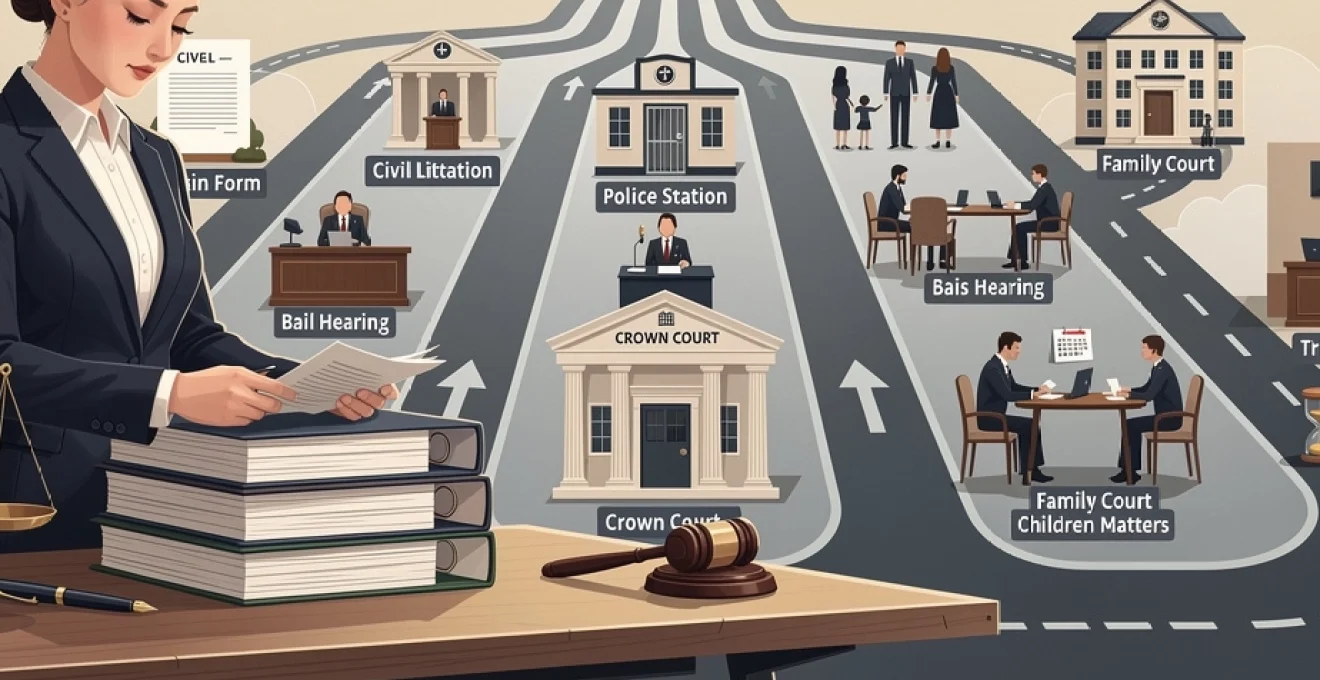
Navigating the complex landscape of legal proceedings requires a thorough understanding of procedural frameworks that govern how disputes are resolved in the UK legal system. Whether you’re facing a civil matter, criminal charges, or family law issues, the procedural requirements can significantly impact the outcome of your case. Legal procedures serve as the backbone of our justice system, ensuring fairness, consistency, and due process for all parties involved. Understanding these mechanisms empowers individuals to make informed decisions about their legal options and helps prevent costly procedural errors that could jeopardize their case.
Pre-action protocols and preliminary legal assessment framework
Before formal legal proceedings commence, the pre-action stage represents a critical phase where parties must demonstrate their commitment to resolving disputes without court intervention. This preliminary framework requires careful consideration of various factors that could influence the success and cost-effectiveness of potential litigation. The Civil Procedure Rules establish clear expectations for conduct during this phase, emphasizing the importance of early disclosure of information and attempts at settlement.
Letter before action requirements under civil procedure rules
The letter before action serves as the formal notification to potential defendants about the nature of the claim and the claimant’s intentions. This document must clearly outline the factual basis of the dispute, specify the remedy sought, and provide reasonable time for response – typically 30 days for most claims. Effective letters before action should include comprehensive details about the events leading to the dispute, relevant legal provisions, and supporting documentation that substantiates the claim.
Courts expect claimants to demonstrate they have made genuine efforts to resolve matters before issuing proceedings. Failure to follow proper pre-action protocols can result in cost sanctions, even if the claim ultimately succeeds. The letter should also propose alternative dispute resolution methods, showing the court that litigation is genuinely the last resort rather than the first option pursued.
Alternative dispute resolution mechanisms and mediation pathways
Alternative dispute resolution offers numerous advantages over traditional litigation, including reduced costs, faster resolution times, and preserved business relationships. Mediation, arbitration, and expert determination represent the primary ADR mechanisms available to disputing parties. These processes allow for more flexible arrangements tailored to the specific needs of the dispute whilst maintaining confidentiality that court proceedings cannot provide.
Courts increasingly encourage ADR participation, and unreasonable refusal to engage with these processes can result in adverse costs orders. Successful mediation resolves approximately 85% of cases that proceed through the process, demonstrating its effectiveness as a dispute resolution tool. The key advantage lies in the parties retaining control over the outcome rather than having a decision imposed upon them by a judge.
Limitation periods analysis and statutory time bars
Understanding limitation periods is crucial for protecting legal rights and ensuring claims remain viable. Most contractual claims must be brought within six years of the breach, whilst tort claims typically have a three-year limitation period from the date of knowledge. Statutory time bars serve to promote certainty in legal relationships and prevent stale claims where evidence may have deteriorated over time.
Certain circumstances can extend or suspend limitation periods, including instances of fraud, concealment, or disability. The courts apply strict rules regarding limitation defences, making it essential to calculate deadlines accurately and consider any factors that might affect the standard periods. Professional negligence claims often involve complex limitation issues, particularly regarding the date of knowledge requirements.
Legal aid eligibility assessment and funding options
Legal aid remains available for certain types of cases, though eligibility criteria have become increasingly restrictive following significant reforms. Financial eligibility depends on both income and capital thresholds, whilst merits criteria assess the prospects of success and proportionality of costs. Exceptional funding may be available where cases raise significant human rights issues or matters of general public importance.
Alternative funding arrangements include conditional fee arrangements (CFAs), after-the-event insurance, and third-party funding options. These mechanisms can make litigation accessible to those who might otherwise be unable to pursue legitimate claims. Understanding the implications of different funding structures is essential for making informed decisions about proceeding with legal action.
Civil litigation procedure from claim initiation to trial
Civil litigation follows a structured pathway designed to ensure fair resolution of disputes whilst managing court resources
Civil litigation follows a structured pathway designed to ensure fair resolution of disputes whilst managing court resources efficiently and proportionately. From the moment a claim is issued to the final hearing, each stage is governed by detailed rules and timetables. Understanding what happens at each step helps you anticipate deadlines, prepare documents properly, and avoid procedural pitfalls that could derail an otherwise strong case.
Part 7 claim form completion and court fee structure
Most civil claims for money or damages are started using the Part 7 claim form (Form N1). This document sets out the names and addresses of the parties, the court in which the claim is brought, a brief description of the nature of the claim, and the value being sought. The claim form must be filed at court, accompanied by the appropriate court fee, and then served on the defendant within the applicable time limits. Think of it as the formal gateway into the civil justice system: if the gateway is defective, the whole case may be compromised.
The court fee for issuing a claim is usually based on the amount you are claiming, with fees increasing in brackets for higher-value claims. For example, a modest small claim may attract a relatively low fixed fee, whereas a substantial commercial dispute could incur a much higher issue fee. Fee remissions (reductions or waivers) may be available for individuals on low incomes or certain benefits, subject to evidence of means. Before issuing, it is wise to check the most recent court fee schedule and consider whether issuing online (through Money Claim Online or other digital platforms, where available) might offer reduced fees or procedural advantages.
Particulars of claim drafting and statement of truth requirements
The particulars of claim expand on the concise information in the claim form and set out the factual and legal basis of the case in detail. They should explain what happened, when and where it occurred, why the defendant is legally responsible, and what remedy you seek (for example, damages, specific performance or an injunction). Particulars may be included on the claim form itself if space allows, or they may be served separately within 14 days of service of the claim form, but in any event no later than 28 days after issue. Clear, chronological drafting helps the court and the defendant understand the dispute from the outset.
Both the claim form and particulars of claim must be verified by a statement of truth. This is a formal declaration, usually in the form: “I believe that the facts stated in this [document] are true.” Signing a statement of truth is not a mere formality; knowingly signing a false statement can amount to contempt of court and may result in serious sanctions. Before you sign, you should check that the facts are accurate and complete, and that any opinions or inferences are clearly distinguished from factual assertions. In practice, treating the statement of truth like a sworn oath helps ensure that only carefully checked documents are filed.
Defence filing procedures and counterclaim mechanisms
Once served with the claim, the defendant has strict time limits in which to respond. Typically, they must either file an acknowledgment of service within 14 days of service of the particulars of claim or file a defence within 14 days. If an acknowledgment is filed, the time for serving a defence is extended to 28 days. Missing these deadlines can lead to the claimant obtaining default judgment, so defendants must act promptly and seek legal advice where necessary. The defence should respond to each allegation, admitting, denying, or putting the claimant to proof in a structured way.
The defendant may also choose to bring a counterclaim if they believe the claimant owes them money or has caused them loss arising out of the same or related facts. A counterclaim is effectively the defendant’s own claim packaged within the same proceedings, usually served alongside the defence. If appropriate, a defendant can also join additional parties via a Part 20 claim, for example where a third party may be liable to contribute to any damages. This procedural flexibility ensures that all related issues can be resolved in a single set of proceedings, rather than through multiple overlapping claims.
Case management conference preparation and directions orders
After the exchange of statements of case (claim form, particulars, defence, and any reply), the court will turn to case management. This usually involves a case management conference (CMC) or, in some instances, a costs and case management conference (CCMC). At this hearing, the judge will set a timetable for the steps leading to trial, such as disclosure of documents, exchange of witness statements, and expert evidence. You can think of it as the project planning meeting for your case, where the court maps out what needs to happen and by when.
Before the CMC, the parties are expected to cooperate and submit draft directions to the court. These proposed directions detail the procedural steps required, estimated time needed, and any special considerations, such as the need for interpreters or adjustments for vulnerable witnesses. The judge may adopt the agreed directions, amend them, or impose entirely new ones by way of a directions order. Thorough preparation, including realistic estimates of time and cost, can avoid later disputes and help keep the litigation proportionate to what is at stake.
Fast track and multi-track allocation criteria
Once the defence has been filed, the court will consider which track is most suitable for the claim: small claims track, fast track, or multi-track. Allocation is based on the value of the claim, its complexity, and the likely length of the trial. Generally, small claims involve lower values and simpler issues, fast track claims are of moderate value with trials lasting no more than one day, and multi-track claims involve higher value or complexity, including extensive expert evidence or multiple parties. Accurate information on value and complexity in the directions questionnaire is therefore crucial.
Fast track cases usually involve more streamlined procedures and tighter timetables to control costs, whereas multi-track cases are managed more flexibly and may involve several interim hearings. Multi-track claims often require detailed costs budgeting, with each party preparing a budget for the court’s approval. For businesses and individuals alike, understanding track allocation helps anticipate likely timescales, procedural demands, and potential exposure to legal costs. If you believe your case has been allocated to an unsuitable track, you can apply to re-allocate, but you will need clear reasons and supporting evidence.
Criminal law procedures and magistrates’ court protocol
Criminal proceedings follow a different procedural route from civil litigation, with a strong focus on protecting the rights of the accused while ensuring efficient administration of justice. Most criminal cases in England and Wales begin in the magistrates’ court, regardless of whether they will ultimately be tried there or in the Crown Court. Understanding key stages such as arrest, interview, bail, and early hearings can help you make informed decisions if you or someone close to you becomes involved in the criminal justice system.
Police station representation rights under PACE 1984
The Police and Criminal Evidence Act 1984 (PACE) sets out crucial safeguards for suspects being questioned by the police. One of the most important rights is the right to free and independent legal advice at the police station, regardless of income. You can request a duty solicitor or ask for your own solicitor to attend before you are interviewed. Exercising this right does not make you look guilty; rather, it ensures that you understand the allegation, the evidence, and the implications of answering or remaining silent.
Under PACE, interviews must generally be recorded, and suspects must be cautioned so they understand that what they say may be used in evidence. Legal representatives can advise on whether to answer questions, provide a prepared statement, or remain silent, depending on the circumstances. Have you ever wondered how a few words in interview can shape an entire prosecution case? Careless answers can be compared to signing a blank cheque: once given, they can be difficult to retract, which is why careful early advice is so vital.
Bail applications and custody time limits framework
After charge, the question of whether the accused should be released on bail or remanded in custody becomes central. The court (or in some cases the police) must consider factors such as the risk of failing to attend court, committing further offences, or interfering with witnesses. Bail may be granted with conditions, for example residence requirements, reporting to a police station, or restrictions on contact with certain individuals. The aim is to balance public protection and the integrity of the case against the fundamental right to liberty.
Where defendants are remanded in custody, custody time limits strictly control how long they can be held before trial, depending on the seriousness of the offence and the court level. Prosecutors must progress cases diligently, and applications to extend custody time limits are scrutinised carefully. From a practical perspective, timely preparation of bail applications, including gathering sureties, accommodation details, and evidence of ties to the community, can significantly improve the chances of release. Bail decisions can usually be revisited if circumstances change or new information emerges.
Crown court committal procedures and plea and trial preparation hearings
More serious offences, or those unsuitable for summary trial, will proceed to the Crown Court. Historically, there was a formal committal process in the magistrates’ court, but modern procedures focus on early allocation and sending of either-way or indictable-only offences to the Crown Court once certain criteria are met. At this stage, the emphasis is on early case management, clarity of the issues, and timely service of evidence. The defendant will usually be asked to indicate a plea at an early hearing, which can influence where and how the case proceeds.
In the Crown Court, the Plea and Trial Preparation Hearing (PTPH) is a key procedural stage. At the PTPH, the defendant formally enters a plea, and if it is not guilty, the judge will set directions for trial, including timetables for disclosure, legal arguments, and witness attendance. You can compare the PTPH to a roadmap meeting: the court, prosecution, and defence all discuss what needs to be done to ensure the trial runs smoothly and fairly. Early guilty pleas may attract significant sentence reductions, so timely legal advice on the strength of the evidence is critical.
Disclosure obligations under criminal procedure and investigations act
The Criminal Procedure and Investigations Act 1996 (CPIA) imposes strict disclosure obligations on the prosecution. They must review all material gathered in the investigation and disclose any unused material that might undermine the prosecution case or assist the defence. The defence, in turn, is required to serve a defence statement outlining the nature of the defence, the issues in dispute, and any alibis, which helps focus disclosure and trial preparation. Effective disclosure is fundamental to a fair trial and is frequently a decisive factor in outcomes.
Failures in disclosure can lead to adjournments, the exclusion of evidence, or even the collapse of prosecutions in serious cases. For defendants, understanding disclosure rights can be empowering: it enables you and your legal team to challenge incomplete or late disclosure and seek further material where necessary. Think of disclosure as the process of turning the lights on in a dark room; without it, the trial risks being conducted in the shadows, undermining confidence in the verdict. Judges now actively manage disclosure through pre-trial reviews and directions to ensure compliance.
Family court procedures and children act applications
Family proceedings are designed to resolve sensitive issues such as child arrangements, parental responsibility, and protection from harm, often under significant emotional strain. The Children Act 1989 provides the core framework for decisions affecting children, with the child’s welfare as the court’s paramount consideration. Applications typically relate to where a child should live, how much time they should spend with each parent, and what specific issues (such as schooling or medical treatment) should be decided and by whom.
Private law children cases often begin with an application for a Child Arrangements Order, Specific Issue Order, or Prohibited Steps Order. Before issuing, parties are usually required to attend a Mediation Information and Assessment Meeting (MIAM), unless exemptions apply (for example, in cases involving domestic abuse or urgency). Once proceedings start, the court may list a First Hearing Dispute Resolution Appointment (FHDRA) to explore settlement, consider safeguarding information from CAFCASS, and set directions for the next steps. The process is more inquisitorial than adversarial, focusing on practical arrangements rather than “winning” or “losing.”
In public law proceedings, where local authorities seek care or supervision orders, the timetable is more intensive and tightly controlled. The court aims to conclude care proceedings within 26 weeks, save in exceptional circumstances, to reduce uncertainty for children. Evidence from social workers, guardians, and expert witnesses will be considered, and the court will examine whether less intrusive orders could protect the child’s welfare. For parents, engaging with assessments, attending hearings, and taking legal advice early can significantly influence outcomes, even where concerns are serious.
Tribunal system navigation and administrative justice
The tribunal system provides a specialist forum for resolving disputes between individuals and the state or other bodies in areas such as employment, immigration, social security, and tax. Tribunals are generally less formal than courts, with procedures tailored to the subject matter and a stronger emphasis on accessibility for people without lawyers. However, the rules can still be complex, and procedural mistakes can delay or derail claims. Understanding each stage—from lodging the claim to presenting evidence at the hearing—can make the process less daunting.
Most tribunals operate to their own procedural rules, but common features include strict time limits for bringing an appeal or claim, requirements to use prescribed forms, and early case management directions. For example, employment tribunal claims usually need to be presented within three months less one day from the relevant event, such as dismissal or discrimination. Many tribunal processes now require initial steps like ACAS Early Conciliation in employment disputes or an internal review in social security appeals before a formal claim can be lodged. Missing these preliminary steps may leave you without a remedy.
At hearings, tribunals often adopt an inquisitorial approach, with the judge (and any lay members) actively questioning parties and witnesses. You will typically be asked to provide a witness statement, supporting documents, and a bundle agreed with the other side. Have you ever felt that presenting your own case is like trying to speak a foreign language? Preparing a clear chronology, identifying the key issues in dispute, and rehearsing how you will explain your evidence in simple terms can all help you communicate effectively on the day.
Appeal procedures and judicial review applications
Even when a case has reached judgment, the legal journey may not be over. Parties who believe a decision is wrong in law, or seriously flawed in procedure, may have options to challenge it through an appeal or, in public law cases, via judicial review. Appeals generally focus on errors of law or serious factual findings that no reasonable tribunal could have reached, rather than simply re-arguing the case. Strict time limits apply, and permission to appeal is often required, so prompt specialist advice is crucial.
The appeal process usually begins with an application for permission, explaining why the decision is arguably wrong and attaching relevant documents such as the judgment and order. Higher courts or tribunals will consider whether the appeal has a real prospect of success or raises some important point of principle. If permission is granted, the appeal will proceed to a hearing where legal arguments are made based on the record of the original proceedings. Fresh evidence is rarely allowed unless certain stringent criteria are met, underscoring the importance of presenting your best case at first instance.
Judicial review is a distinct procedure used to challenge the lawfulness of decisions or actions by public bodies, such as government departments, regulators, or local authorities. It does not re-hear the case on its merits but examines whether the decision-maker acted within their powers, followed fair procedures, and reached a rational conclusion. Judicial review claims must usually be brought promptly and within three months of the decision, and pre-action protocol letters are essential to set out the issues and seek resolution without litigation. You might think of judicial review as a quality control mechanism for public decision-making, ensuring that even powerful bodies remain accountable to the rule of law.